← All Articles
PEMF Therapy Explained: How It Works, What the Research Shows, and What to Expect
Every cell in your body runs on a small electrical charge. PEMF uses gentle magnetic pulses to support it. Here's how it works, what the research shows for joints, surgery recovery, sleep, and more, and what a session at MK feels like.
MK Wellness InsightsFounded by Danielle Cordova, Cypress, TX
On this page (10 sections)
Most people have never heard of PEMF until they try it, and then they wonder why no one told them sooner. Pulsed electromagnetic field therapy is one of the longest-standing frequency therapies there is: the FDA approved the first PEMF device for bone healing in 1979. It's quiet and simple, and for many of our clients it becomes the foundation of everything else they do.
This guide covers how PEMF works, what the research shows, what a session at MK feels like, and what to know before you start.
The Short Version
- What it is: gentle, pulsing magnetic fields that pass through your body while you lie on a mat.
- What it feels like: most people feel deeply relaxed. Some feel a light pulse or warmth; many feel nothing at all.
- Why people choose it: joint and back comfort, recovery after workouts or surgery, sleep, stress, and energy.
- The research: FDA-approved for bone healing since 1979, with placebo-controlled trials for arthritis pain, post-surgery pain, sleep, and fibromyalgia.
- How long: 20 to 30 minutes, fully clothed.
How PEMF Works
Every cell in your body carries a small electrical charge across its outer membrane, a bit like a tiny battery. That charge is what lets cells bring nutrients in, move waste out, and talk to each other. Stress, poor sleep, inflammation, injury, and age all wear it down.
A PEMF device sends short magnetic pulses through your tissue. A changing magnetic field creates a tiny electrical current (the same physics that runs a power generator), so each pulse gives your cells a gentle electrical signal. It passes through clothing, and even through a cast, without heating anything.
Cells respond to that signal in a few well-studied ways:
- Calcium and nitric oxide: the pulses speed up a calcium signal inside cells that switches on nitric oxide, a molecule that relaxes blood vessels and helps calm inflammation. The Columbia surgery study below used a PEMF signal designed to target exactly this pathway.
- Repair signals: in lab studies, PEMF increases the growth factors cells use to rebuild bone and tissue. This is the basis for its long use in fracture healing.
- Circulation and calm: better blood flow to the treated area and, for many people, a noticeable shift toward the rest-and-repair side of the nervous system.
Your body is designed to heal. PEMF doesn't override anything; it gives your cells a nudge in the direction they already want to go.
Why People Choose It
- Sore joints and back: a drug-free option many people use for everyday comfort.
- Recovery: athletes use it between hard training days. Others use it after an injury or surgery, with their surgeon's okay.
- Sleep and stress: sessions feel deeply calming, so many clients book them in the evening.
- Energy: clients often describe feeling "recharged" and clearer afterward.
- A primer for other therapies: PEMF is one of our favorite ways to start a visit. It settles the body before red light or hyperbaric oxygen.
What the Research Shows
A long FDA history. The FDA approved the first PEMF bone growth stimulator in 1979, for fractures that hadn't healed on their own. In 2004 it approved a PEMF device as an add-on to neck (cervical) fusion surgery for people at high risk of the fusion not healing (FDA summary). Some PEMF devices are also FDA-cleared to help relieve pain and swelling after surgery.
Arthritis. A 2020 review in Physical Therapy pooled 16 placebo-controlled trials in people with osteoarthritis. Compared with placebo, PEMF reduced pain (an effect the authors called clinically significant) and stiffness, and improved physical function. The benefit held across different PEMF settings (Yang et al., 2020).
After surgery. In a double-blind study at Columbia University Medical Center, women who received PEMF after breast reduction surgery had 57% lower pain scores one hour after surgery, with lower pain lasting through 48 hours. They used 2.2 times less narcotic pain medicine, and their wound fluid had much lower levels of the inflammatory signal IL-1β (Rohde et al., 2010).
Sleep. In a four-week, double-blind study of 101 people with insomnia, about 70% of the PEMF group reported substantial or complete relief, compared with one person (2%) in the placebo group. No side effects were reported (Pelka et al., 2001).
Fibromyalgia. In a randomized, sham-controlled trial of 56 women with fibromyalgia, the PEMF group improved in pain, daily function, mood, and quality of life. The pain and function gains were still there 12 weeks later (Sutbeyaz et al., 2009).
What a Session Feels Like at MK
You lie down, fully clothed, on a full-body PEMF mat for 20 to 30 minutes. That's it.
- Most people feel deeply relaxed, and many drift into a light sleep.
- Some feel a gentle pulse or tingle, or mild warmth in sore areas.
- Now and then a muscle near the mat twitches lightly. That's normal.
- Many people feel nothing during the session and notice the calm afterward.
What to Know Before You Start
PEMF is gentle and non-invasive, but it isn't for everyone. Tell us before your first session if any of these apply:
- Implanted electronic devices: a pacemaker, defibrillator, cochlear implant, insulin pump, or implanted pain or nerve stimulator. PEMF isn't for you.
- Pregnancy: we skip PEMF during pregnancy.
- Check with your doctor first if you have: a seizure disorder, a bleeding condition, an organ transplant (on immune-suppressing medicine), active cancer in the area being treated, or a joint replacement or other metal implant.
How Often
These are the starting points we use at MK. We'll adjust to how your body responds.
- General wellness: 2 to 3 sessions a week.
- A new injury: 5 sessions a week for 2 weeks, then we reassess.
- Ongoing aches and pains: 3 to 4 sessions a week.
- Athletes: before and after key training days.
- Sleep and stress: 2 to 3 sessions a week, ideally in the evening.
- Stacking: early in a visit, as a primer before red light or hyperbaric oxygen.
Pairs Well With
- Red Light Therapy: light for your mitochondria, the energy makers in your cells.
- Infrared Sauna: deep, gentle heat for circulation and relaxed muscles.
- Mild Hyperbaric Oxygen: extra oxygen for tissues doing repair work.
- BioCharger: another frequency therapy, combining light, sound, and fields.
Common Questions
Will I feel anything?
Maybe not, and that's normal. PEMF is subtle. Most people notice deep relaxation, and some feel a light pulse or warmth. What people come for, like comfort and better sleep, tends to build over time.
How soon will I notice a difference?
Many clients feel calmer after the first session. The sleep and fibromyalgia studies above ran three to four weeks, so give it a steady few weeks before you judge it.
Is PEMF safe?
It's gentle and non-invasive, it doesn't heat your tissue, and it has decades of clinical use behind it. The main exceptions are implanted electronic devices and pregnancy (see above).
Does PEMF add to my EMF exposure?
It's a fair question, and one we hear often in the holistic community. PEMF mats use slow, low-frequency pulses for a session you choose. That's a very different kind of exposure from the constant, high-frequency radio waves of phones, Wi-Fi, and cell towers.
Can I do PEMF at home?
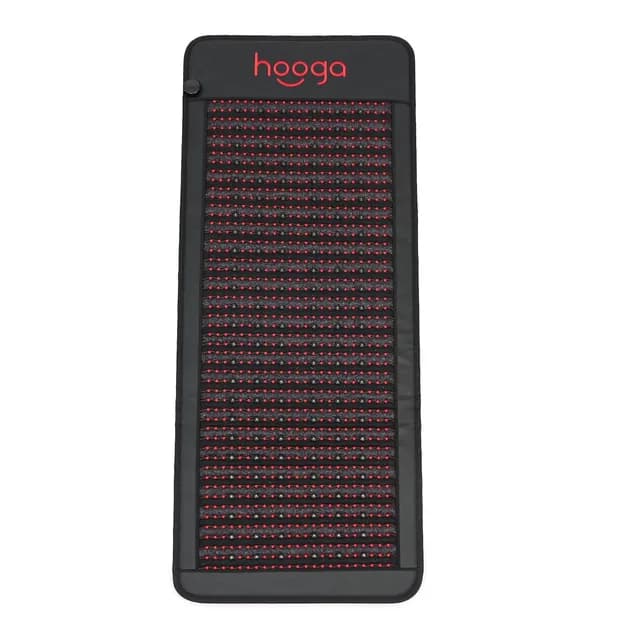
Yes. A home mat is a nice way to keep the benefits going between visits. We like the Hooga Red Light PEMF Mat, which combines red and near-infrared light, PEMF, and infrared heat in one full-body mat.
Can I combine it with other therapies the same day?
Yes, and it's one of our favorite ways to start a visit. On a membership, each modality you use counts as 1.
Our view: your body is electrical, and it's designed to heal. PEMF doesn't force anything; it gives your cells a gentle signal to do what they already know how to do. With FDA history going back to 1979 and a growing list of placebo-controlled trials, it's one of the most established frequency therapies there is. We believe frequency and light are the future of medicine, and PEMF is where many of our clients start.
Try it at MK Wellness
PEMF Therapy
- Single session: $49
- Included on Weight Support, Energize, Elevate (6-month commitment), and Optimize, where it counts as 1 modality.
Go Deeper
- Yang et al., PEMF for osteoarthritis, Physical Therapy (2020)
- Rohde et al., PEMF after breast reduction surgery, Plastic and Reconstructive Surgery (2010)
- Pelka et al., PEMF for insomnia, Advances in Therapy (2001)
- Sutbeyaz et al., PEMF for fibromyalgia, The Clinical Journal of Pain (2009)
- FDA summary for the Cervical-Stim PEMF device (2004)
- Our related guides: red light therapy, the BioCharger, and getting more from your recovery sessions
MK Wellness services are non-medical and not intended to diagnose, treat, cure, or prevent any condition. This article summarizes published research for educational purposes. Consult your physician before starting any wellness program.
Mentioned in This Article
Some links in this article are affiliate or referral links, and MK Wellness may earn a commission at no extra cost to you. Affiliate disclosure.
Put This Into Practice
The Recovery & Healing Protocol at MK Wellness
We build this goal around modalities that work better together. The core of the protocol:
About MK Wellness
MK Wellness was founded by Danielle Cordova after years of searching for real answers for her own family. Our Insights follow The MK Way: root cause over symptoms, the whole body as one system, and honest reporting on what the evidence does and doesn't show. This article is for general education, not medical advice.
Read our story →The MK Way Letter
Root-cause wellness, in your inbox.
Dani's notes on functional health, recovery science, and the habits and tools we actually use, with honest takes on what the research shows. No spam, unsubscribe anytime.
Keep Reading
Ready to start your protocol?
Book at MK Wellness