← All Articles
Rebuilding Muscle After Menopause: Dr. Eric Berg's 3-Part Plan
Muscle slips faster after menopause, but it still responds to a stronger signal. Dr. Eric Berg's free guide rebuilds it in three parts: protein at every meal, a few key nutrients, and strength training that builds up safely. Here's his plan, what the research shows, and what to know before you start.
MK Wellness InsightsFounded by Danielle Cordova, Cypress, TX
On this page (8 sections)
Dr. Eric Berg is one of the most-followed health educators online, known for his work on keto, intermittent fasting, and nutrition. He earned his Doctor of Chiropractic degree from Palmer College of Chiropractic in 1988 and has since stepped away from clinical practice to focus on education (his bio).
His free Postmenopausal Muscle Loss Recovery Guide (July 2026) answers a question so many women ask after menopause: how do I get my strength back? Here's his plan in plain language, with what the research shows. These are his views, and the training part works best with your doctor's okay and a good coach.
Why Muscle Slips After Menopause
Muscle loss tends to speed up after menopause. Part of the reason is what researchers call anabolic resistance: as hormones shift, muscle becomes less responsive to protein and exercise.
Dr. Berg's key point is a hopeful one. The response hasn't disappeared. Your muscles just need a stronger signal, from your plate and from your training.
It's worth the effort. Muscle is your metabolism's engine, the biggest place your body stores blood sugar, and the pull that keeps your bones strong.
His plan builds in order: nutrition first, then training that puts those nutrients to work. Small, steady changes add up. Doing too much too soon leads to injury and burnout.
Part 1: Protein
Your daily target
Dr. Berg's guide suggests most women aim for about 0.54 to 0.72 grams of protein per pound of body weight each day. For a 150-pound woman, that's roughly 80 to 110 grams a day.
For very active women, he points to the International Society of Sports Nutrition's range, about 0.64 to 1.0 gram per pound. The society advises active women after menopause to aim for the upper end (Journal of the International Society of Sports Nutrition, 2023). If you're rebuilding muscle, aim high in your range.
At least 25 to 30 grams at each meal
Your daily total is only part of it. Researchers suggest older adults aim for about 25 to 30 grams of quality protein per meal to help keep their muscle (American Journal of Clinical Nutrition, 2015). A 4-ounce serving of cooked chicken, fish, or lean beef has roughly 25 to 35 grams.
Breakfast is often the lowest-protein meal of the day, so it's a good place to start.
Leucine: the muscle-building switch
Leucine is the amino acid that flips your body's "build muscle" signal. Dr. Berg says that after menopause, it takes more leucine in one meal to flip it, up to twice what younger adults need. So he anchors every meal with a leucine-rich food. His top picks:
- Cheese: Swiss, cottage cheese, mozzarella, and Parmesan
- Fish: yellowtail, tuna, salmon, and cod
- Poultry: chicken and turkey
- Meat: lean beef, ham, and pork loin
- Eggs and plain whole-milk yogurt
- Plant options: firm tofu and pumpkin seeds
- Whey protein isolate, if you use a protein powder
His guide has a chart with serving sizes for each one.
When you eat matters
- Skip the snacking. Small bites of protein through the day can keep you under the leucine threshold, so the building signal never fully turns on.
- Space protein meals 3 to 4 hours apart. After a good protein meal, muscle needs a few hours to reset before it responds strongly again.
Fasting, with your muscle in mind
Many women fast to help with weight gain, a slower metabolism, and insulin resistance after menopause. Dr. Berg supports it, with one caution: long fasting windows make it hard to eat enough protein. He offers two tracks.
Keeping the muscle you have:
- Two or three protein-anchored meals a day, 3 to 4 hours apart
- Time-restricted eating from 12:12 up to 18:6 (an eating window of 12 hours, down to 6)
- One meal a day only 2 or 3 days a week, if you like it, with a very high-protein meal. Watch how your strength and energy respond.
- Multi-day fasts can cost muscle. If you do them, protect your protein and strength training before and after, and don't stack them back to back.
Rebuilding muscle:
- Three protein-anchored meals a day, 3 to 4 hours apart, at the high end of your protein range
- Time-restricted eating from 12:12 up to 15:9, or a normal eating schedule
- No one-meal-a-day and no multi-day fasts while you rebuild
Part 2: Supporting Nutrients
Beyond protein, Dr. Berg highlights four nutrients that help muscle respond to training. He lists food sources first and suggests supplements only if they're right for you.
- Creatine supplies quick energy during strength training and supports strength and recovery. Food sources: beef, pork, herring, and salmon. As a supplement, it's usually taken as creatine monohydrate.
- Omega-3s (EPA and DHA) may help muscle respond better to protein and training. He suggests oily fish 2 to 3 times a week: salmon, sardines, mackerel, or cod liver.
- Vitamin D supports normal muscle function, and low levels are linked to more muscle loss. Get tested; he aims to keep levels above 30 ng/mL. Sources: sunlight (build up gradually, and never burn) and fatty fish.
- Magnesium helps your body make energy, use vitamin D, and relax muscles. Sources: nuts, seeds, leafy greens, and dark chocolate.
We don't share supplement amounts. Ask your doctor what's right for you. If creatine fits your plan, we carry Thorne's NSF Certified for Sport creatine through our Thorne dispensary.
Part 3: Training
The study behind the plan
His training plan is modeled on the LIFTMOR trial (Journal of Bone and Mineral Research, 2018). In it, 101 women past menopause with low bone density, average age 65, trained twice a week for 30 minutes, for 8 months, under close supervision. They lifted heavy (five sets of five reps at 85% or more of the most they could lift once) and finished with jumping and landing exercises.
Compared with women doing a gentle home program:
- Spine bone density rose 2.9%, while the home group lost 1.2%.
- Hip bone density held steady, while the home group lost 1.9%.
- Every strength and function test improved, including standing up from a chair, a timed walking test, reach, and back and leg strength.
- The only injury was one minor back spasm.
The three lifts
- Back squat: thighs, hips, and lower back
- Deadlift: the whole back of the body, and everyday lifting strength
- Overhead press: shoulders, arms, and posture
Impact, one step at a time
Impact teaches your muscles, bones, joints, and tendons to absorb shock. He builds it in three stages:
- Landing practice, with your feet staying on the floor
- Low-impact moves that start to load your bones gently
- Impact loading: supervised jumps and drop landings, the full signal for your hips
If you have osteoporosis, do impact work only with professional supervision.
Build up in three phases
- Weeks 1 to 4, learn the moves: body weight or very light weights, 2 to 3 sets of 8 to 10 comfortable reps, plus landing practice. Twice a week.
- Weeks 5 to 8, add moderate weight: once your form is solid, 3 sets of 8, where the last 1 or 2 reps feel hard but doable. Add low-impact moves. Twice a week.
- Week 9 and beyond, go heavier: work gradually toward about 80% of your max, in 4 to 5 sets of five, with more rest between sets. Add impact loading. Twice a week. Never trade form for weight.
Every session, in order
- Warm up for 5 to 10 minutes with an easy walk or stretching, then do 1 or 2 very light practice sets.
- Lift: one of the three lifts, rotating each session.
- Finish with impact, changing the moves each session.
What the Research Shows
- Older adults need more protein. An international expert group, PROT-AGE, recommends that adults over 65 eat more protein than younger adults, and more still if they're active (Journal of the American Medical Directors Association, 2013). Dr. Berg's everyday range matches their advice for active older adults and goes a bit higher.
- Leucine matters more with age. In older adults, an amino acid drink modeled on whey protein didn't boost muscle building, but a version richer in leucine did. In young adults, extra leucine added nothing (American Journal of Physiology, 2006). Animal proteins generally carry more leucine than plant proteins (American Journal of Clinical Nutrition, 2015).
- Spread protein through the day. The International Society of Sports Nutrition advises active women to spread protein evenly, every 3 to 4 hours (Journal of the International Society of Sports Nutrition, 2023).
- Fasting alone can cost muscle. In a 12-week trial of 116 adults with overweight, eating only between noon and 8 p.m., with no other changes, didn't beat regular mealtimes for weight loss. Among those tested in person, the fasting group lost more lean mass in their arms and legs (JAMA Internal Medicine, 2020). It's a good reason to pair fasting with protein and strength training, as Dr. Berg does.
- Creatine works best with lifting. A 2026 review of 7 randomized trials in 608 women past menopause found creatine added about 0.8 pounds of lean mass and 16 pounds on the leg press, mainly when paired with strength training. Bone density didn't change, side effects were mild and similar to placebo, and kidney markers didn't change (Journal of the International Society of Sports Nutrition, 2026).
- Omega-3s and aging muscle. In a 6-month trial of 60 healthy adults aged 60 to 85, fish oil increased thigh muscle volume by 3.6% and improved grip and overall strength compared with corn oil (American Journal of Clinical Nutrition, 2015).
- Heavy lifting can be safe for thinning bones when it's supervised and built up gradually, as LIFTMOR showed.
What to Know Before You Start
- Get your doctor's okay first, especially if you have osteoporosis, heart problems, high blood pressure, joint issues, or any chronic condition. Ask for a vitamin D test at the same visit.
- Have kidney disease? Ask before raising your protein or adding creatine. People with severe kidney disease may need to limit protein.
- Find a coach. The women in LIFTMOR worked up to heavy weights over months, with close supervision. A certified trainer or physical therapist can teach you clean form.
- Start light and build slowly. Use a weight you can control with clean form, and add a little only when your top set feels manageable. Give each muscle group time to recover before you work it again.
- Know effort from injury. Hard work and mild soreness for a day or two are normal. Sharp pain, joint pain, or pain that lingers isn't. Stop and get help for chest pain, dizziness, or anything that feels wrong.
- Take medicine for blood sugar or blood pressure? Ask your doctor before you fast.
His quick-start checklist
- Get your doctor's okay and a vitamin D test
- Hit your daily protein target, in meals spaced 3 to 4 hours apart
- Anchor each meal with a leucine-rich food, and add the supporting nutrients
- Skip the snacking
- If you fast, keep it sparing and adjust to how you feel
- Start Phase 1, and progress gradually over the coming weeks
Our view: muscle is one of the best investments a woman can make after menopause. It's the engine of your metabolism and the scaffolding for your bones, and your body is designed to keep building it at any age. Dr. Berg's plan fits how we think: give the body the raw materials, then the signal. Build each plate around protein, fill the rest with vegetables and fruit, and add sweet potatoes, rice, or potatoes for energy on lifting days.
How This Fits at MK Wellness
We're not a gym, and we don't prescribe diets or training plans. We support the work you're doing:
- EMS Body Contouring drives strong muscle contractions in the core, glutes, arms, and thighs, alongside your lifting.
- The vibration plate adds loading for your bones. In a review of randomized trials, it led to small gains in hip bone density in women after menopause (Osteoporosis International, 2010).
- A 3D body scan tracks muscle gained and inches lost, which the scale can't show.
- Recovery between lifting days: compression boots, the infrared sauna, and red light.
- The Weight Support membership includes 16 modalities a month and a nutrition counseling appointment each month.
Our Perimenopause Toolkit turns all of this into a step-by-step checklist. When you need something we don't offer, we connect you with people we trust.
Go Deeper
- Postmenopausal Muscle Loss Recovery Guide, Dr. Berg's free guide (PDF, July 2026)
- The Perimenopause Toolkit and Perimenopause Protocols
- EMS explained and 3D body scanning
- Ketosis and fasting: when they help, and who should skip them
MK Wellness services are non-medical and not intended to diagnose, treat, cure, or prevent any condition. This article summarizes Dr. Eric Berg's published views and related research for educational purposes. It deliberately includes no supplement doses. Talk with your doctor before starting heavy strength or impact training, raising your protein, fasting, or adding supplements.
Mentioned in This Article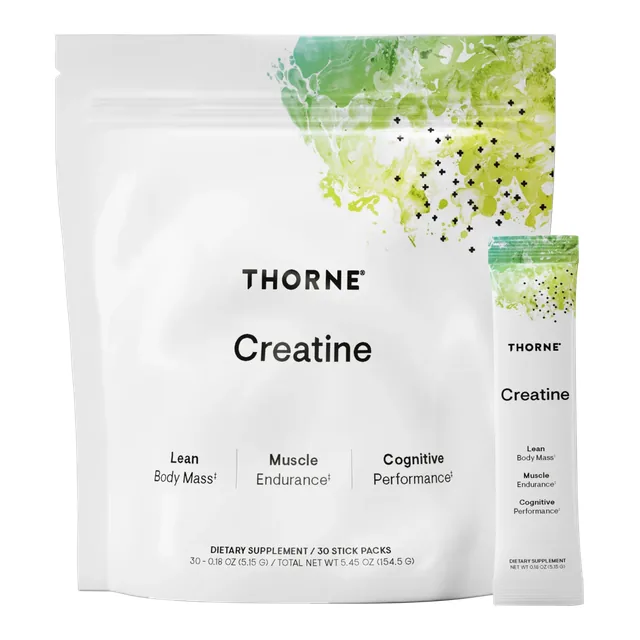
Thorne Creatine, Travel Packs
NSF Certified for Sport creatine, for muscle mass, endurance, and cognitive performance. Available through our Thorne dispensary.
Shop Now →Thorne Magnesium CitraMate
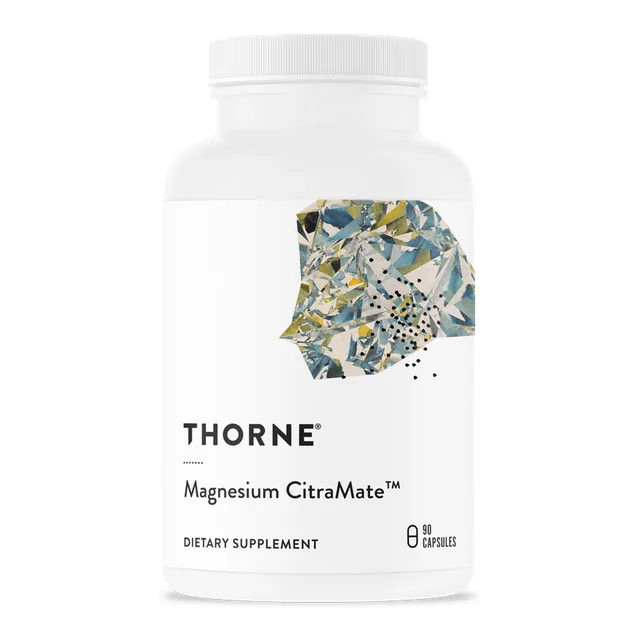
Highly absorbable magnesium some athletes use to support muscle relaxation and recovery. Available through our Thorne dispensary.
Shop Now →Some links in this article are affiliate or referral links, and MK Wellness may earn a commission at no extra cost to you. Affiliate disclosure.
Put This Into Practice
The Hormonal Balance Protocol at MK Wellness
We build this goal around modalities that work better together. The core of the protocol:
About MK Wellness
MK Wellness was founded by Danielle Cordova after years of searching for real answers for her own family. Our Insights follow The MK Way: root cause over symptoms, the whole body as one system, and honest reporting on what the evidence does and doesn't show. This article is for general education, not medical advice.
Read our story →The MK Way Letter
Root-cause wellness, in your inbox.
Dani's notes on functional health, recovery science, and the habits and tools we actually use, with honest takes on what the research shows. No spam, unsubscribe anytime.
Keep Reading
Ready to start your protocol?
Book at MK Wellness